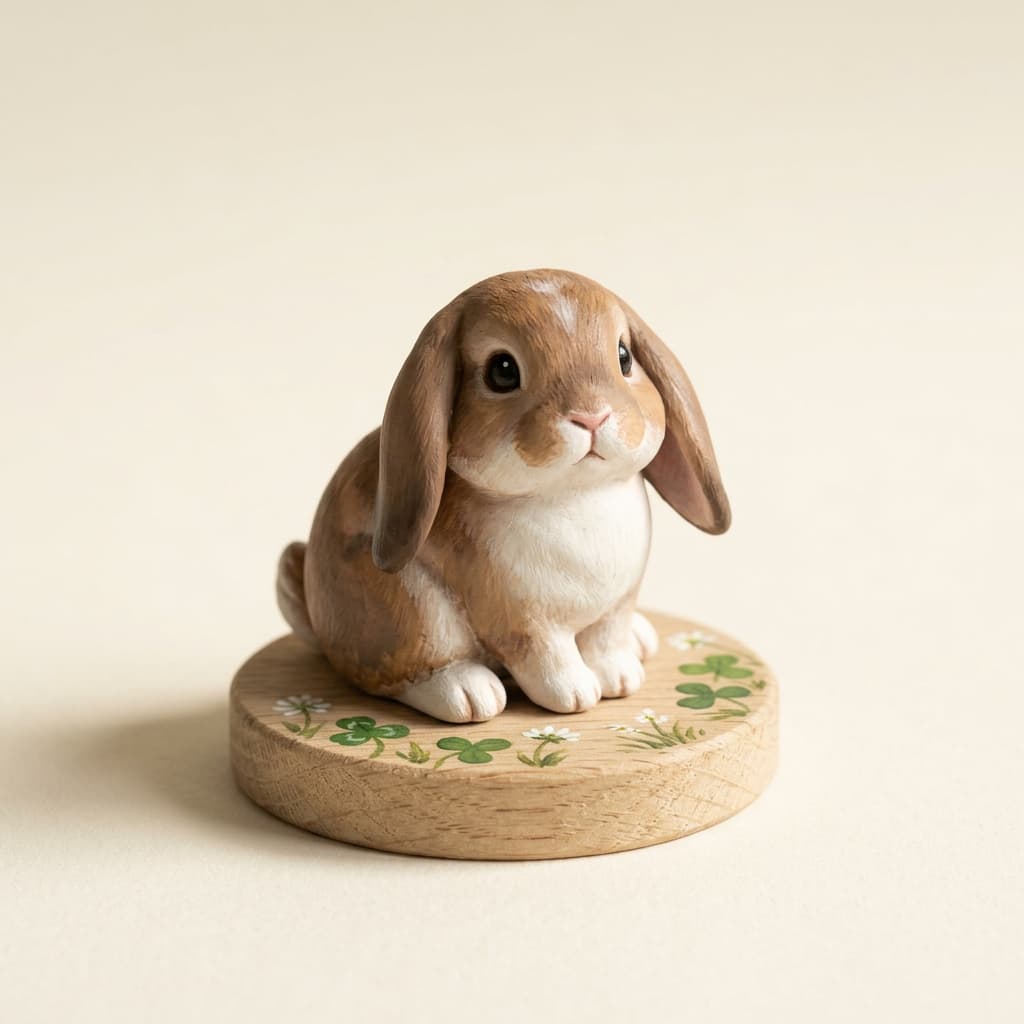
A compact rabbit portrait with soft contours and lop ears
Clover focuses on the features that make a Holland Lop rabbit recognizable: ears that fall alongside the face, a rounded resting body and a gentle expression. The Semi-Realistic treatment keeps the anatomy soft and compact. A fawn-and-cream coat, pale chest and small clover-inspired detail provide interest without overwhelming the portrait.
The Mini sculpture measures 8 cm along its longest side, excluding the base. At this scale, the ears need a clear outline against the body, and the nose and eyes need enough definition to hold the expression. Shallow fur suggestions suit the rabbit’s soft coat better than deep, repetitive grooves. The final pose and footprint are confirmed in the digital proof.
Resin form, soft painted tones and base options
A custom resin sculpture carries the shape of the body, paws and hanging ears. High-resolution printing supports those small contours, while hand painting creates the fawn-to-cream transitions and the lighter chest. Gentle shading around the cheeks and ear folds adds depth without making the coat look harsh. A protective coating completes the finish.
The current Mini Semi-Realistic configuration includes an oak name base, standard hand painting and protective packaging. A clover-inspired scene base, as suggested by this composition, is a different base selection rather than an automatic Mini inclusion. Available base changes are shown in the configurator; more elaborate floral scenery needs a separate quote. Enhanced painting, an acrylic cover and gift packaging are also optional.
Making a small lop-eared rabbit figurine
- Review the ear shapes and coat. Send a clear face photograph and views from both sides. Lop ears can fall differently, so it helps to show their usual position. A full-body view explains the resting outline, and daylight makes the fawn and cream regions easier to compare.
- Develop a readable sculpt. The digital model establishes the rounded body and the separation between ears, cheeks and shoulders. The proof is the stage to discuss how far the ears hang, the tilt of the face and the simplicity of any base decoration.
- Print and prepare the resin. The approved model is printed, followed by support removal, surface finishing and priming. Fine ear edges and small decorative forms need dimensions that work at Mini scale.
- Paint and protect the surface. Soft coat transitions come first, followed by the lighter paws and chest, facial shading and eye highlights. Any agreed base details are painted to complement the rabbit. Inspection and protective packing follow the finish.
Confirming the details and delivery expectations
For a similar rabbit portrait, identify the usual ear positions and the shape of any pale patches before modeling. If the pose hides one paw or part of an ear, an additional reference angle can help explain the anatomy. Keep small clover or floral details simple enough to remain readable beside an 8 cm sculpture, and confirm the selected base before approving production.
The schedule below describes normal proof, production and shipping estimates for a new photo-based order. Customer review and replies are separate. Share a gift date before ordering, and allow for customs, carrier delays and holidays. November and December normally need an extra 3–5 business days.
Caring for the ears and small painted details
Display the rabbit indoors, away from direct sunlight, moisture and heat. Dust with a soft, dry brush, and support the body and base when moving it. Hanging ears and decorative clover shapes should not be used as lifting points. An optional cover can help reduce dust around the smaller contours. The figurine is a decorative collectible for ages 14+, with small and fragile parts.