A tuxedo cat design built around distinctive markings
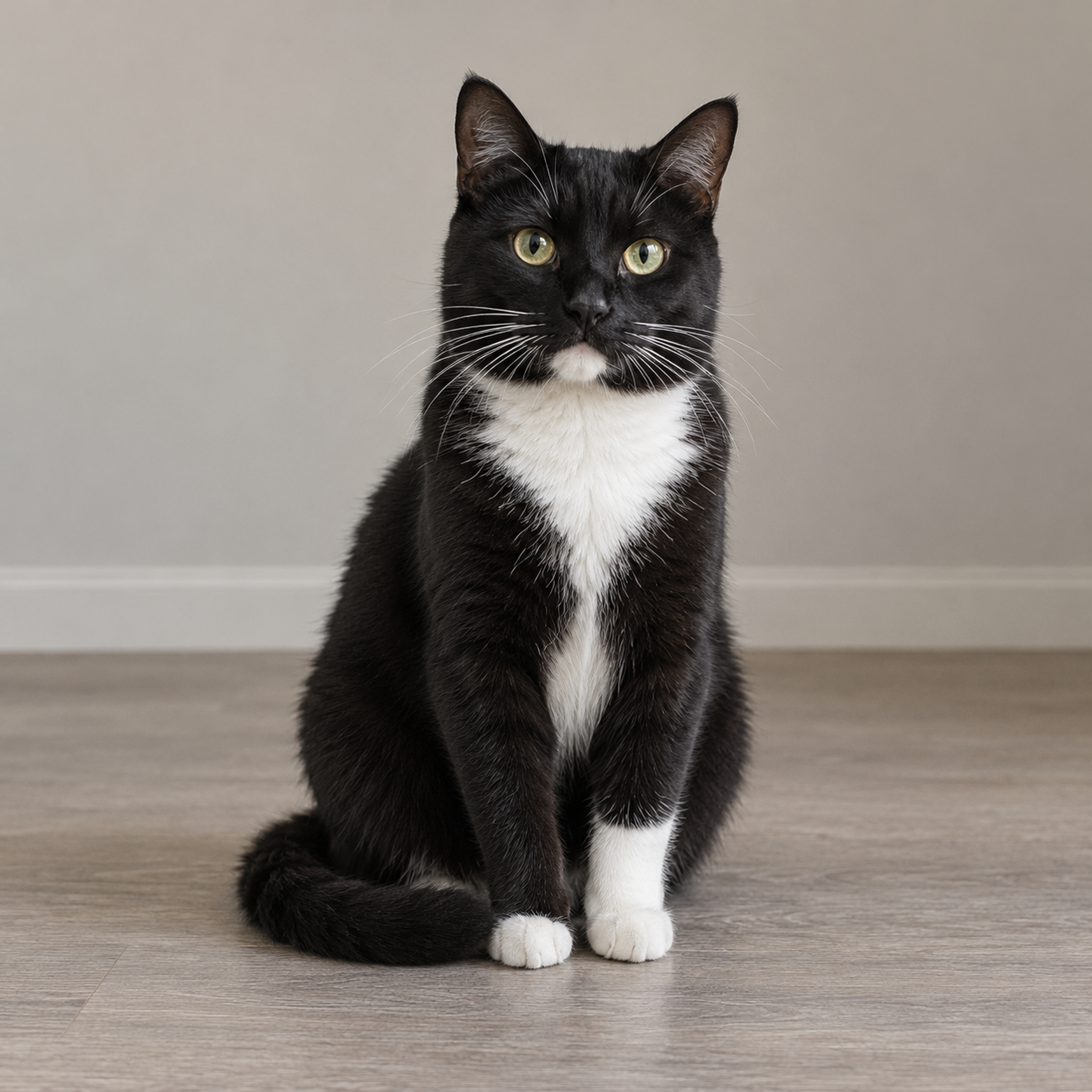
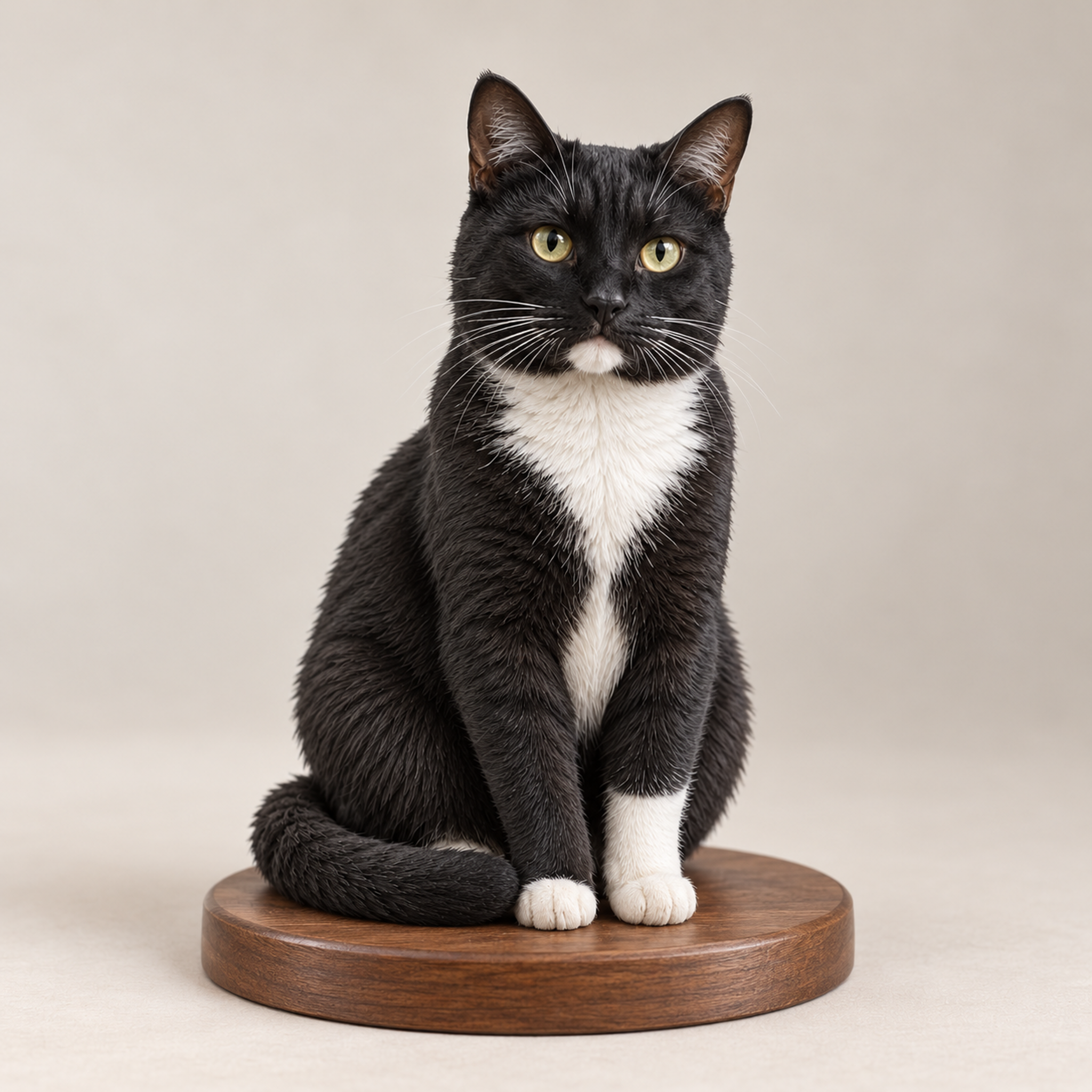
Oreo is a design study for a custom tuxedo cat figurine, with a white chin and chest bib, uneven white front socks and a tail resting close to the body. The proposed Semi-Realistic treatment keeps natural adult-cat proportions while simplifying very fine fur detail for a small display piece. The planned size is approximately 10 cm along the longest dimension of the cat, excluding the base; final dimensions would be confirmed with the pose.
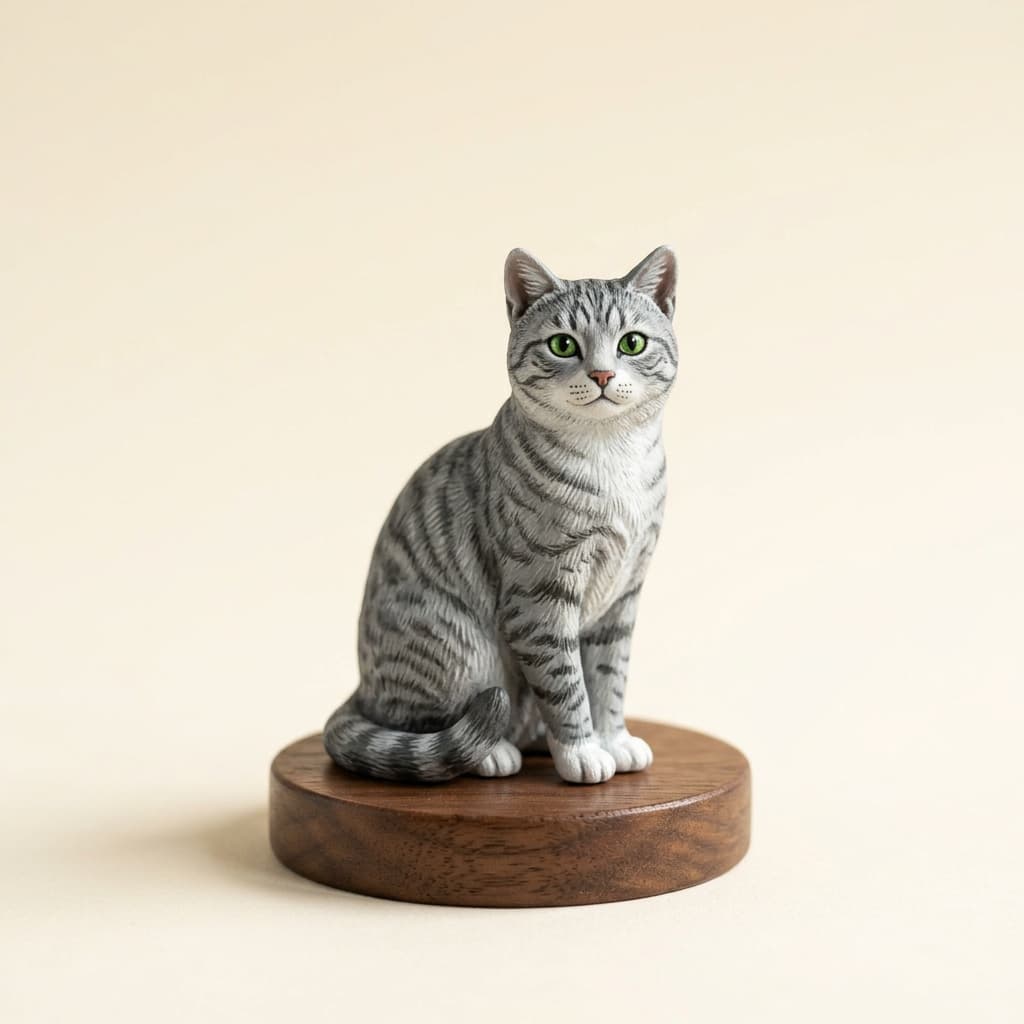
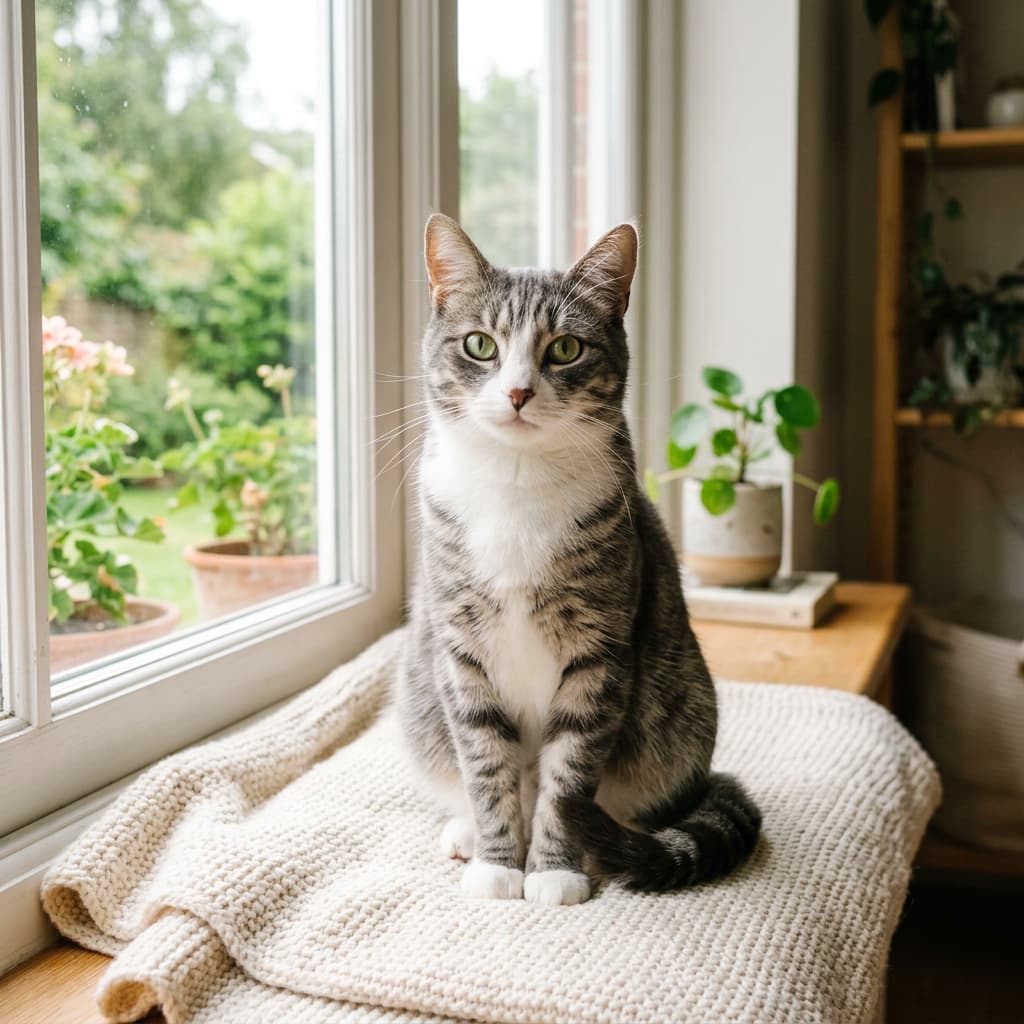
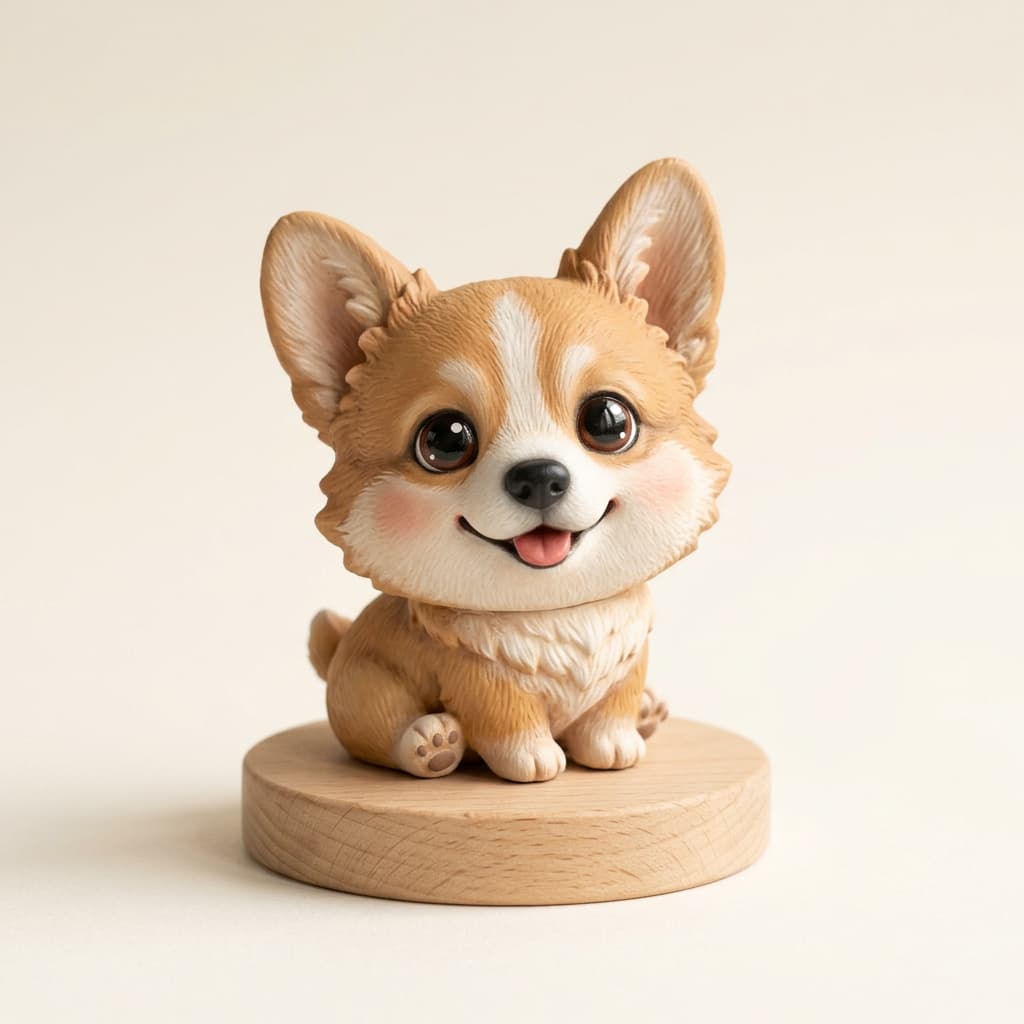
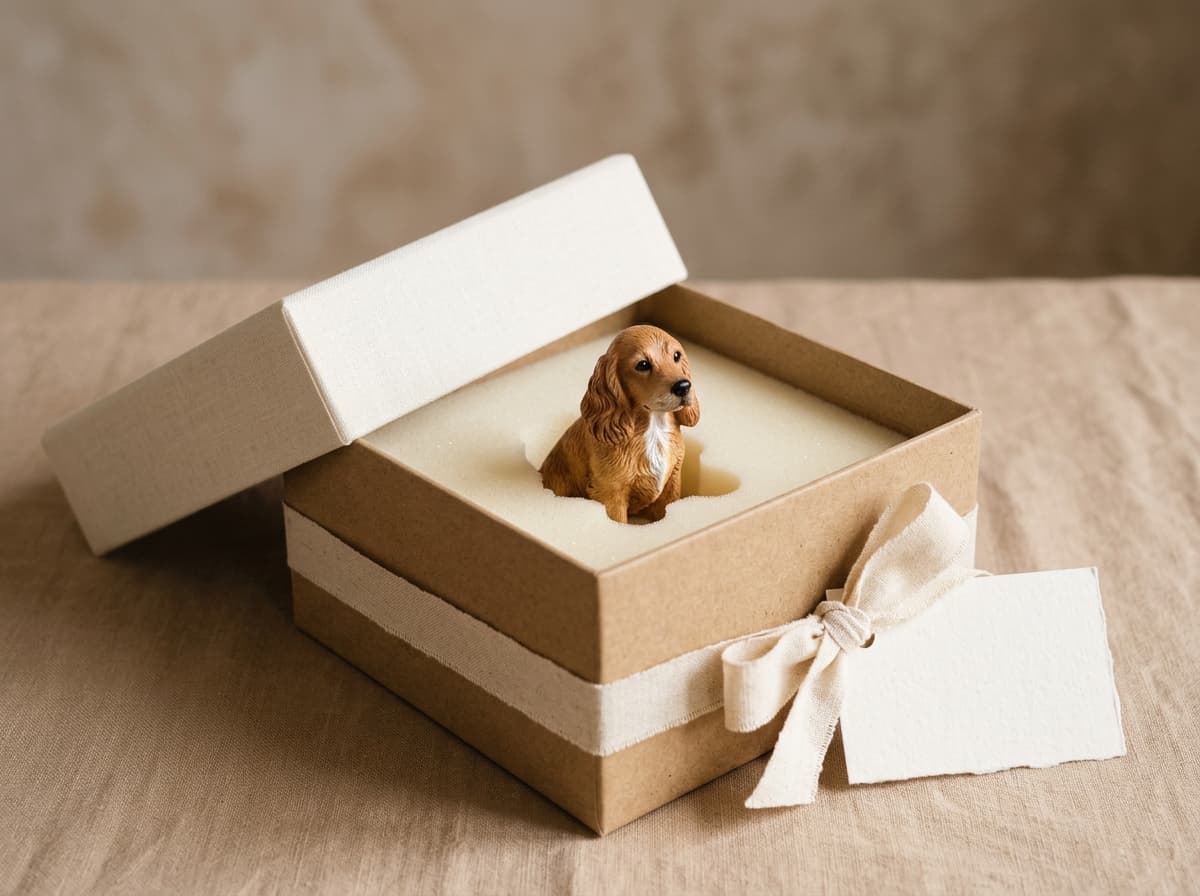
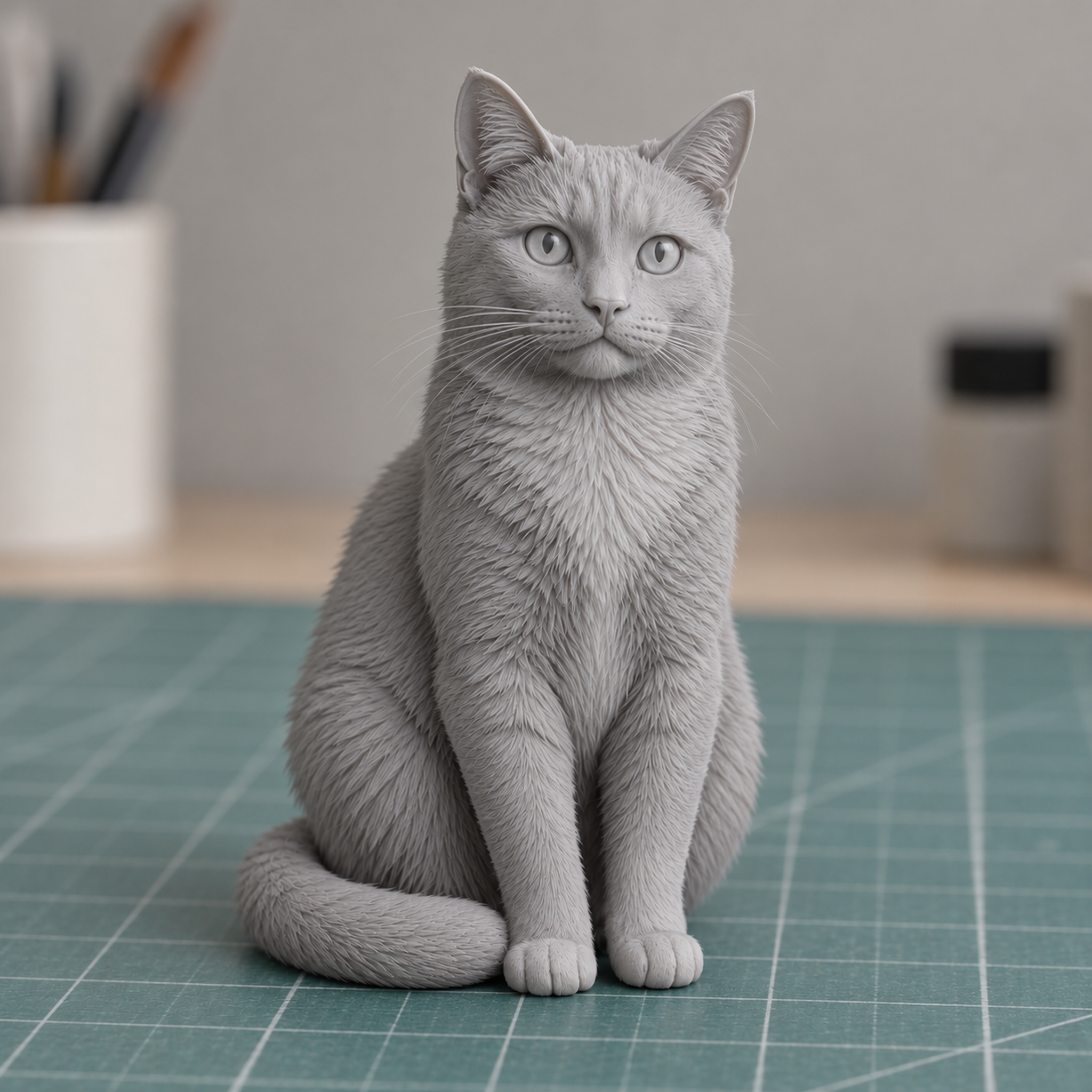
The images on this page are AI-generated illustrations of the proposed design and workflow. They are not photographs of a completed customer order or records of an actual print, sculpting session or painting session. The following guide explains the design choices and how a comparable photo-based commission would be approached.
### Reference review: separating coat markings from shadows
A black-and-white coat needs more than a clear front portrait. A face view helps identify the chin patch and eye shape; side views show where the chest bib ends, how high each white sock rises and how the tail meets the body. Daylight photographs without strong filters are useful because reflections on black fur can resemble lighter patches.
For this study, the identifying feature is a higher white sock on the cat’s left front leg, meaning the viewer’s right in a straight-on view. The opposite front paw has a shorter white sock. For a real commission, that distinction should be checked against the supplied photographs, rather than made symmetrical by assumption. Any unseen markings would need clarification before the design is finalized.
### Digital sculpting and proof review
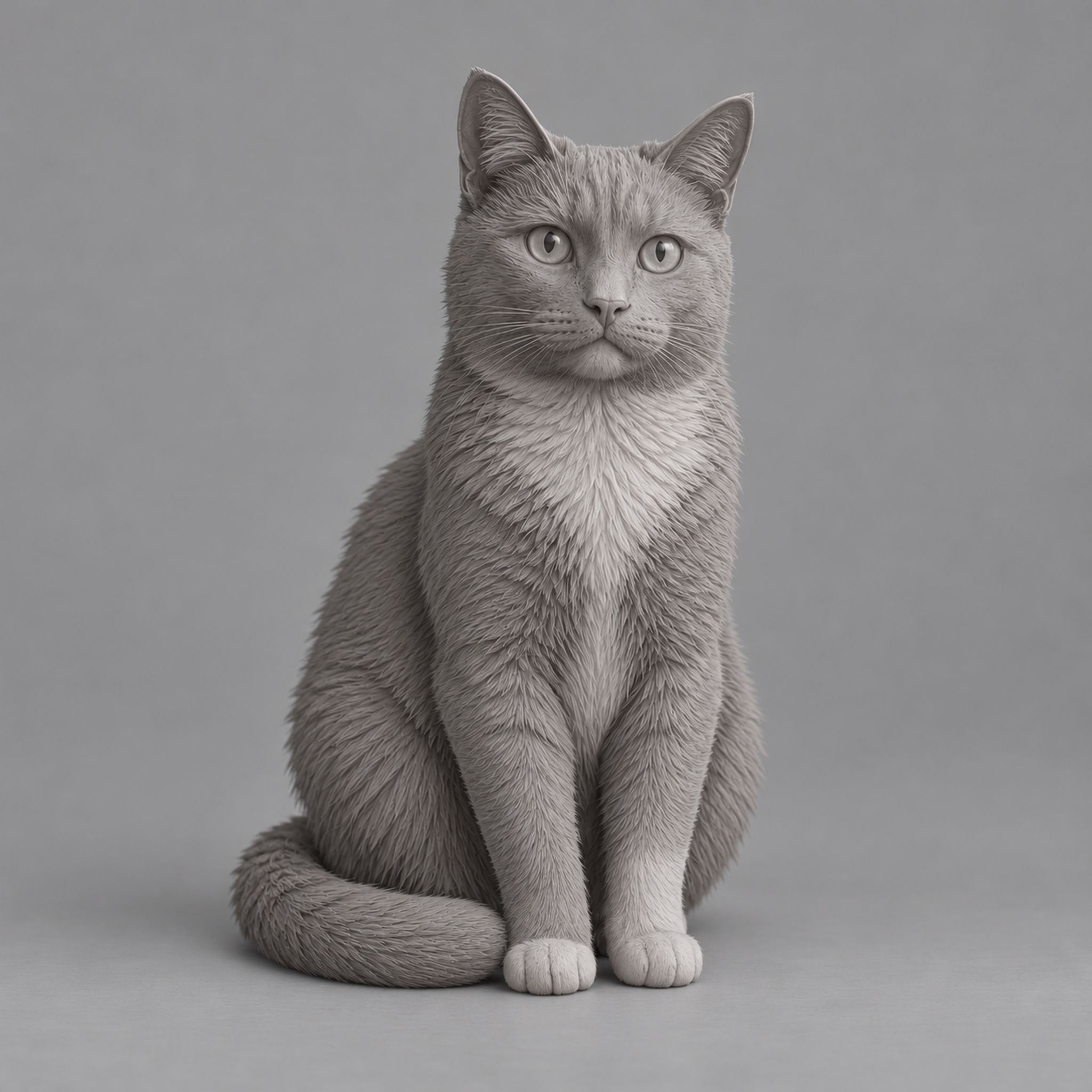
The proposed seated pose uses a level head, relaxed shoulders and a tail curving around the cat’s right side toward the front paws. Bringing the tail close to the body reduces exposed, fragile sections. Ear thickness and the spaces between the legs would also need checking at the selected print size.
The digital proof is the point to discuss cheek width, ear angle, gaze and tail position within the agreed design. A plain grey sculpt shows form and silhouette; it does not demonstrate the final painted markings. The white bib and uneven socks should therefore be confirmed through the accompanying marking references or a color preview where provided. Approval of the agreed design comes before printing. See the full photo-to-figurine process.
### Resin printing and surface preparation
For a comparable physical piece, the approved sculpt would be resin printed, followed by support removal, surface finishing and priming. These stages prepare the shape for paint and help address visible support marks. Particular attention would go to the ears, front paws and the junction between the tail and body.
This concept does not specify a printer model, layer height or resin grade. Those production settings should follow the actual equipment, material and model geometry. A preview image alone cannot establish print quality or prove that a physical sample has been produced.
### Hand painting a black-and-white coat
The painting plan uses a deep charcoal-black coat with restrained highlights so the face remains readable. Warm off-white is proposed for the chin, chest bib and socks, with the uneven boundaries preserved. Yellow-green eyes and a black nose provide small focal details without changing the cat’s natural proportions.
At this scale, the larger marking boundaries matter more than painting every individual hair. Fine brushwork would refine the muzzle and paw edges after the main color areas are established. A protective finish would complete the painted surface. The exact sheen should be agreed for the commission; screen images and lighting can make colors appear different, and hand-painted pieces can have small variations.
### Planning a similar figurine
Before ordering, identify the features you most want preserved and choose the view from which the figurine will usually be displayed. Compare figurine styles and sizes when deciding whether a compact portrait or a larger piece suits your space. The plain round wooden base shown here is illustrative; the base, inscription and other additions should match the options confirmed for your order.
Normal planning estimates are shown below. They describe a new commission, not a production history for Oreo. Your time reviewing the proof is separate, and shipping begins after production and dispatch. For a gift with a fixed date, check the shipping policy and discuss timing before ordering.
### Display, care and your next step
Keep a painted resin figurine indoors, away from direct sunlight, moisture and heat. Dust gently with a soft, dry brush and support the body or base when moving it. Avoid lifting the piece by the ears or tail.
To plan a portrait of your own cat, start your custom cat figurine with clear photographs and a short description of the pose and markings that matter most. You can also compare this design with the Miso tabby cat design to see how striped and solid coat patterns call for different painting decisions.