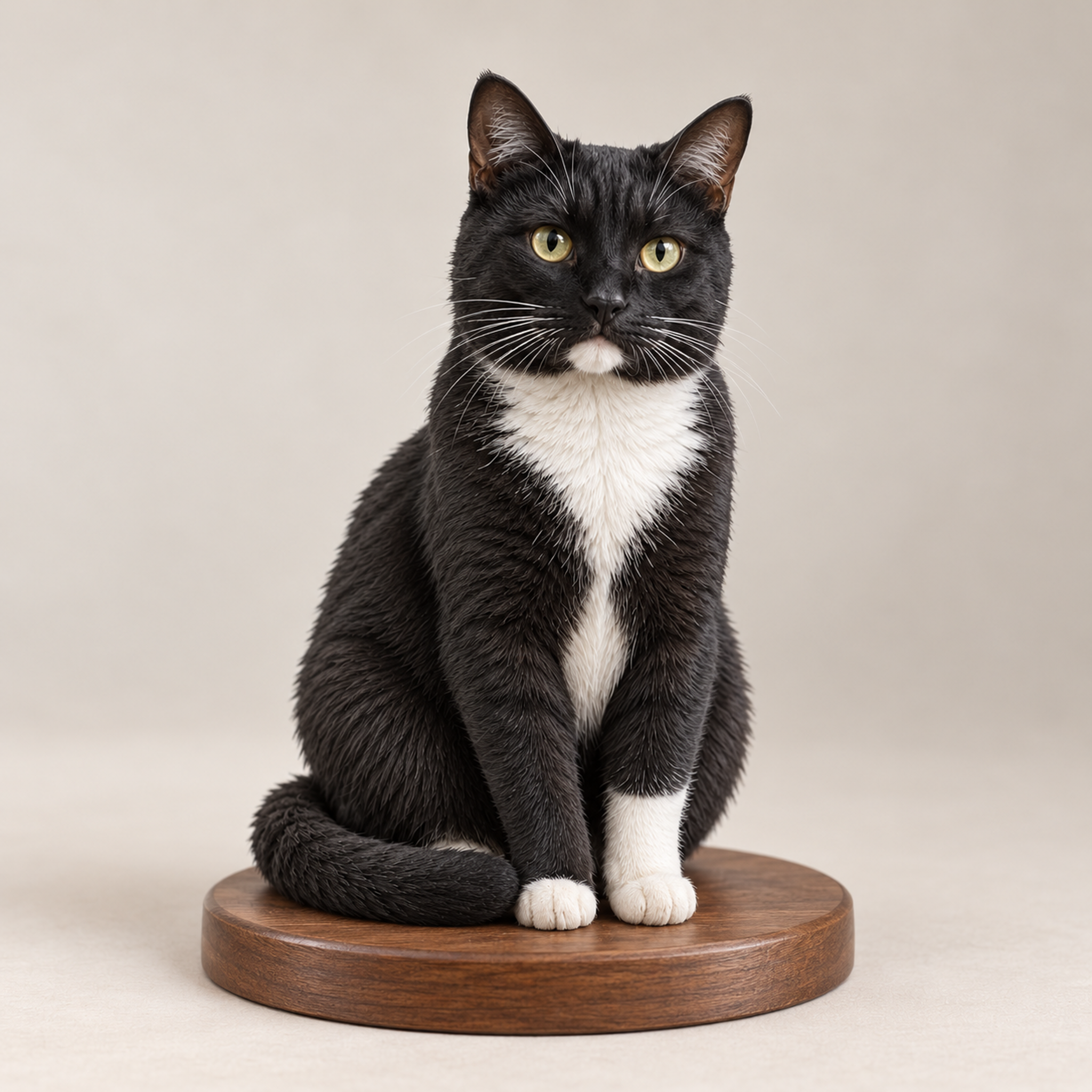
A tabby cat portrait shaped by a quiet, attentive pose
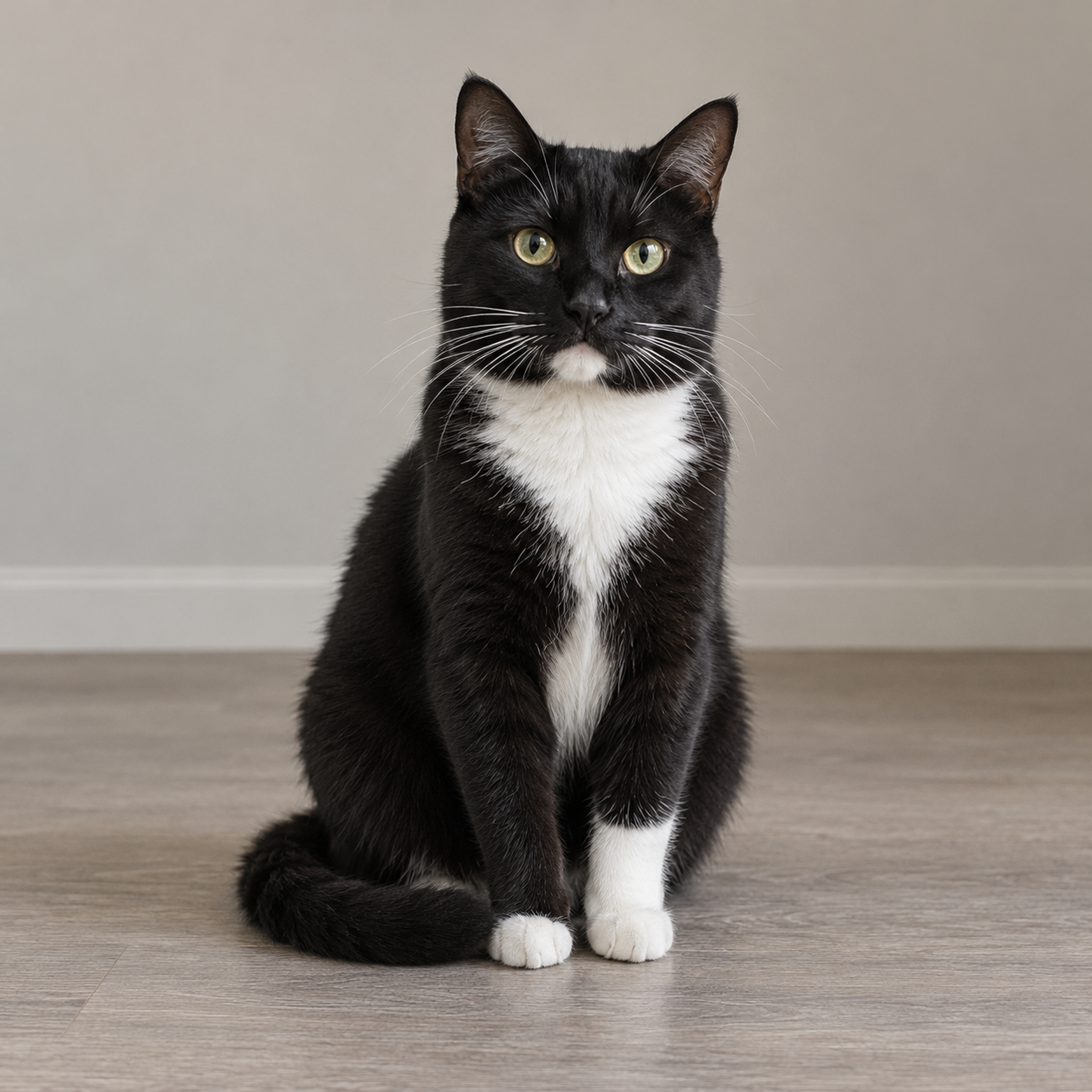
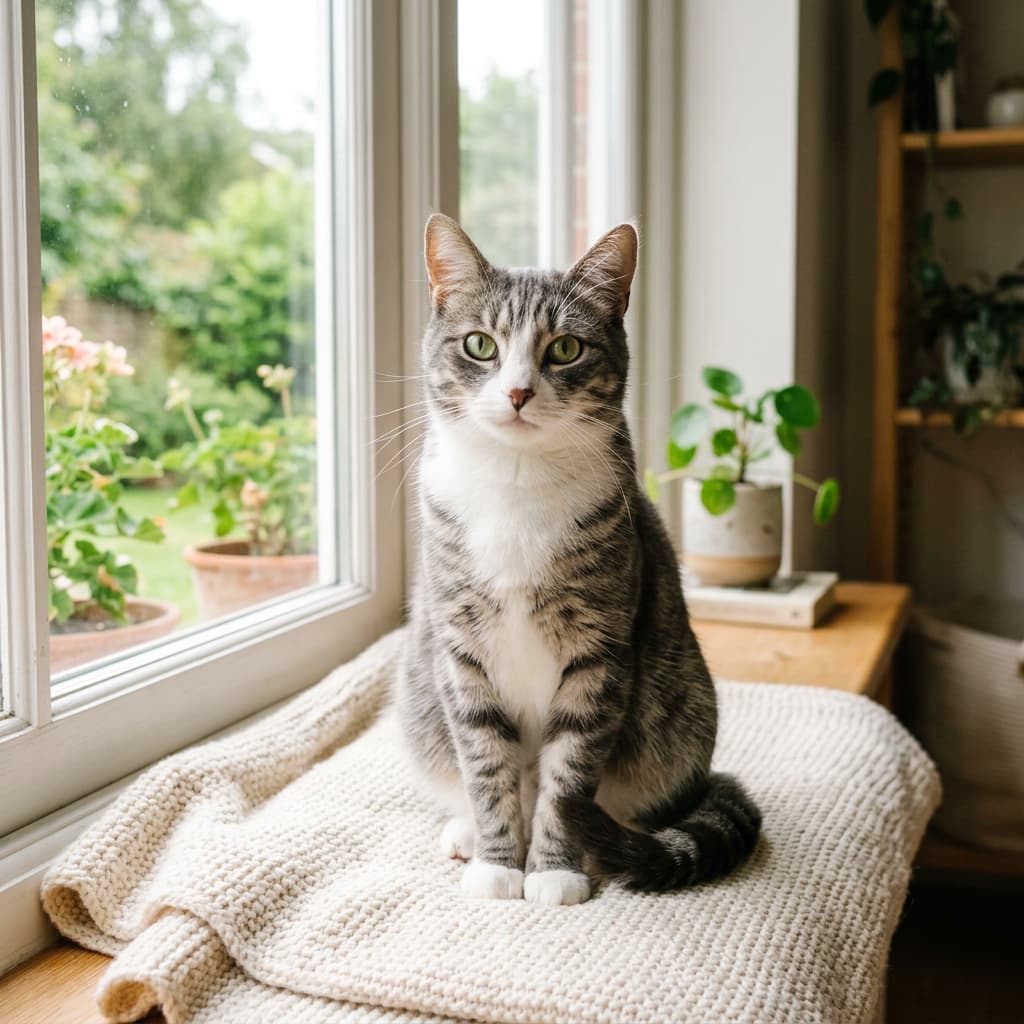
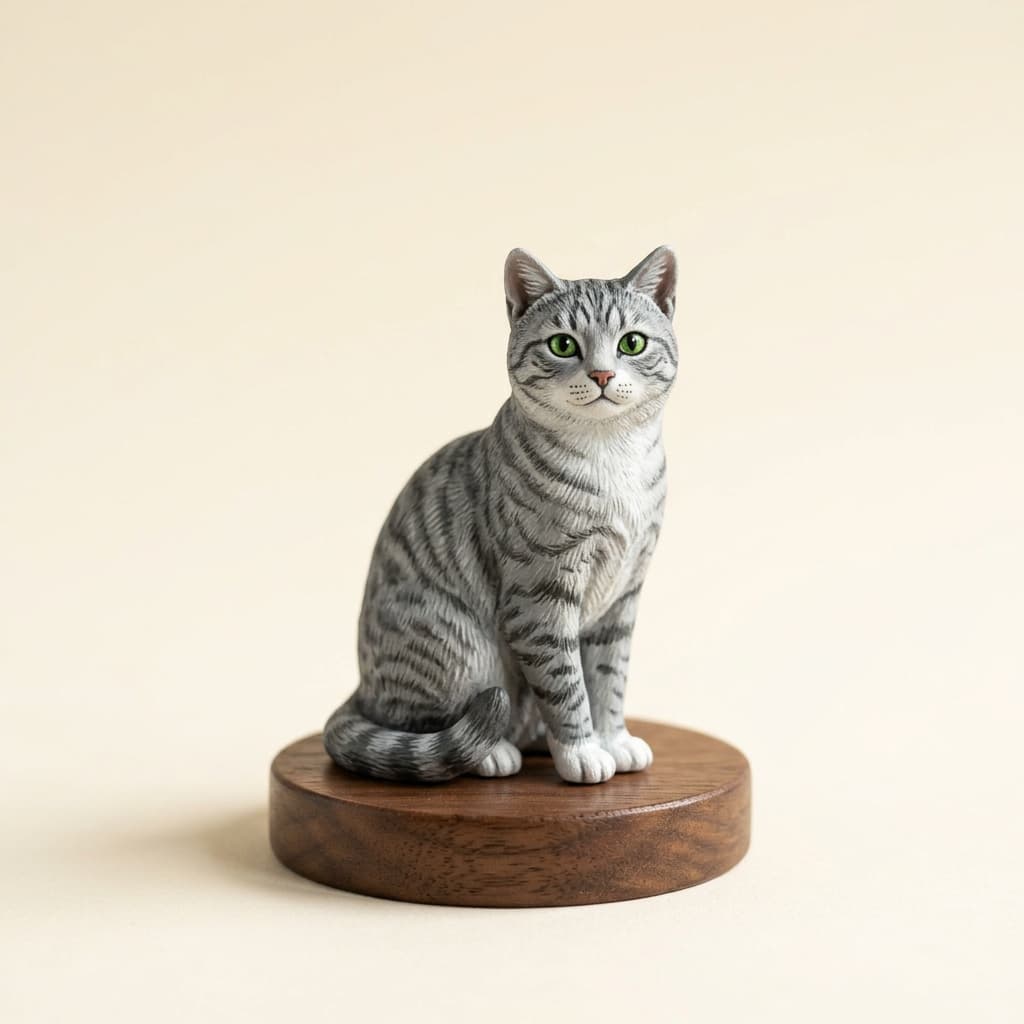
Miso explores the familiar posture of a cat watching from a window: an upright seated body, a relaxed tail and an attentive gaze. The Semi-Realistic treatment focuses on the relationship between the face, shoulders and paws. The forehead’s tabby M, pale chin and darker tail tip provide recognizable landmarks without relying on exaggerated proportions.
The Classic sculpture is approximately 10 cm along its longest side, excluding the display base. At this scale, a few well-placed stripes can describe the coat more effectively than densely painted individual hairs. The face remains the visual center, while the tail helps connect the seated pose to the base. Overall dimensions and the tail position are confirmed in the proof.
Resin form and hand-painted tabby markings
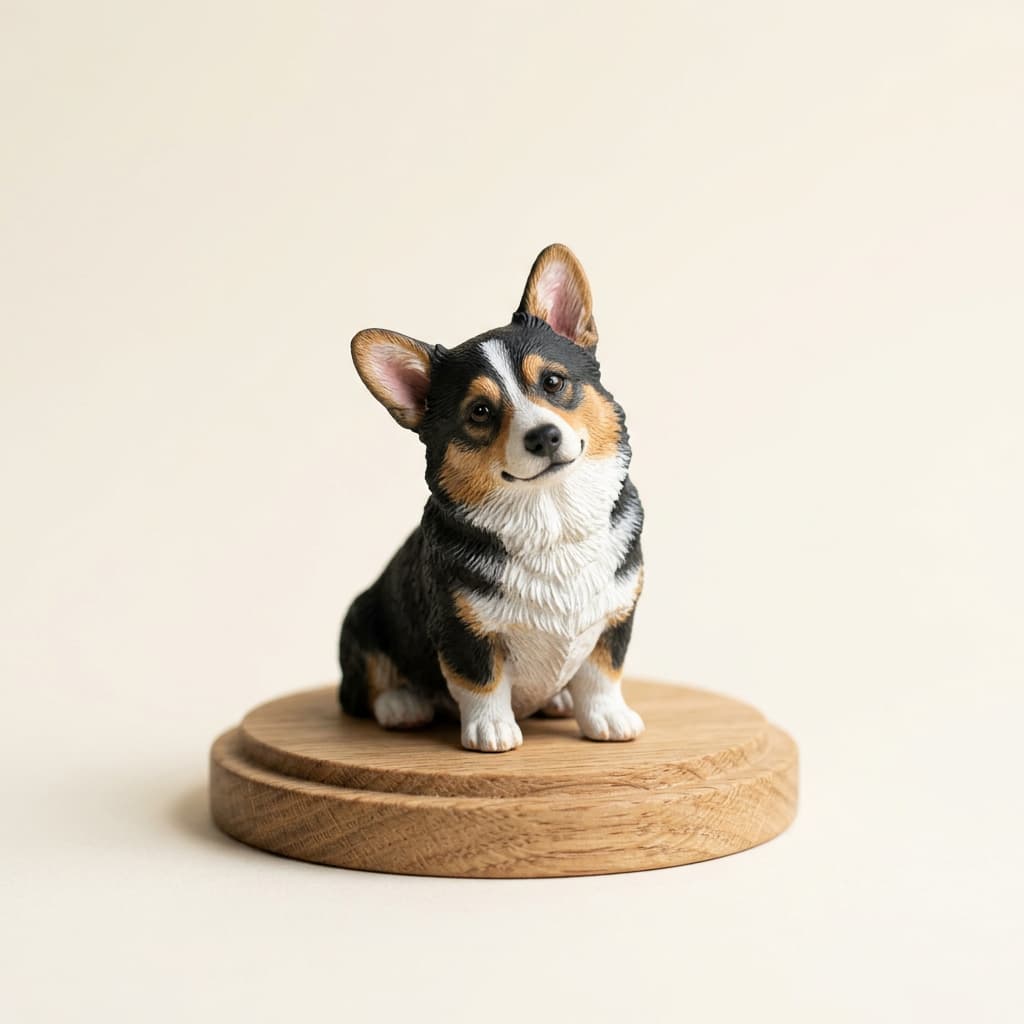
A high-resolution resin print gives the cat its physical shape, including the ears, muzzle, chest and tail. Hand painting supplies the tabby pattern and the transitions between darker stripes and the warmer background coat. The sculpted surface supports the shape of the animal; the painted pattern carries much of the individual identity.
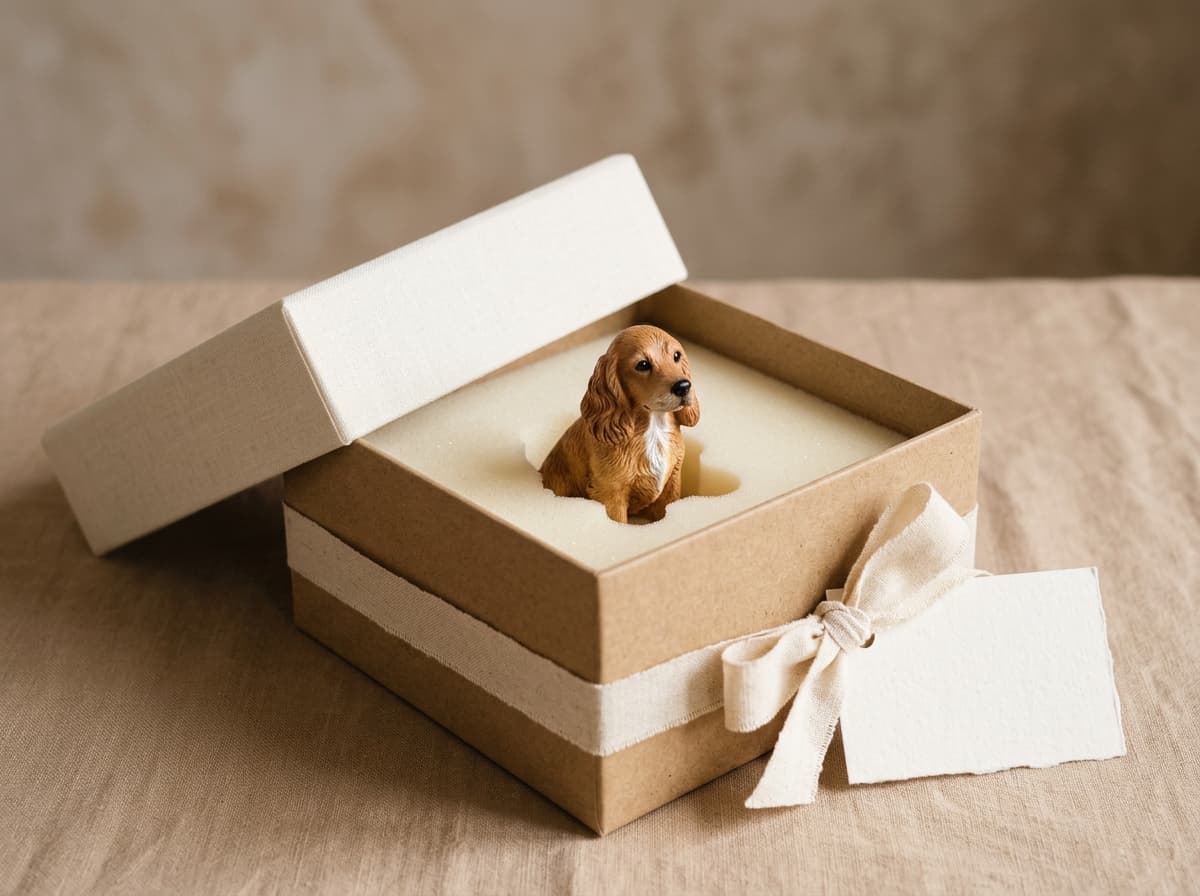
The current Classic Semi-Realistic selection includes an oak name base, standard hand painting, a protective coating and protective packaging. You can select enhanced painting or another base separately. An acrylic cover and gift packaging are optional additions. Because coat color changes under different light, clear daylight references are especially useful when planning a tabby portrait.
Turning a tabby reference into a finished figurine
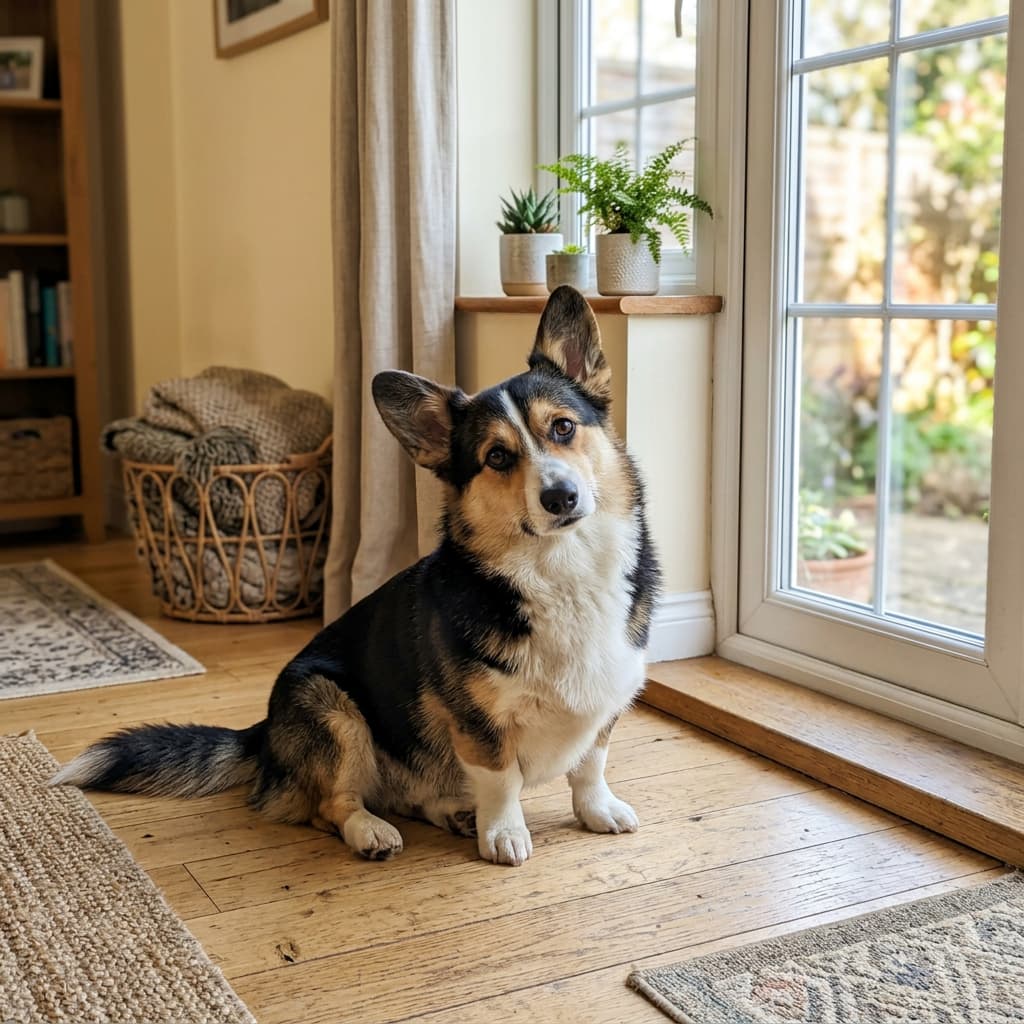
- Collect complementary views. Include a face view for the forehead M and eye shape, side views for the body stripes, and a view of the tail. Describe the usual seated pose and any distinctive pale patches. A close-up should accompany, rather than replace, a full-body reference.
- Develop the digital sculpt. Establish the shoulder height, cheek shape and tail position before refining the expression. The proof is the opportunity to discuss the gaze, ear angle and proportions, along with the key marking references.
- Prepare the physical surface. The approved model is resin printed, then goes through support removal, surface finishing and priming. Tail and ear details are considered at the selected scale so their outlines remain clear.
- Build the coat in paint. Base tones are followed by larger stripe groups, the light muzzle and chest, and eye highlights. Small painted differences are part of a handmade finish. The protective coating, inspection and packing complete the production stages.
Planning the proof and arrival
For a similar cat figurine, flag the markings that make your cat recognizable: an unusual forehead pattern, a white chin or a band near the tail tip. Photographs taken in the same lighting help compare those regions. During proof review, consider the gaze from the angle at which the sculpture will usually be displayed, as well as from straight ahead.
The timeline below describes normal proof, production and shipping estimates for a new photo-based order. Your approval and replies take additional time. For a date-sensitive gift, contact us before ordering, and allow for holidays, customs and carrier delays. November and December normally require an extra 3–5 business days.
Displaying a painted cat sculpture
Keep the figurine indoors on a secure shelf, away from direct sunlight, moisture and heat. Use a soft, dry brush around the face and tail, and support the body and base when moving it. Avoid lifting by the tail or ears. A display cover is available separately if you prefer a more enclosed presentation. The sculpture is a decorative collectible for ages 14+, with small and fragile parts.