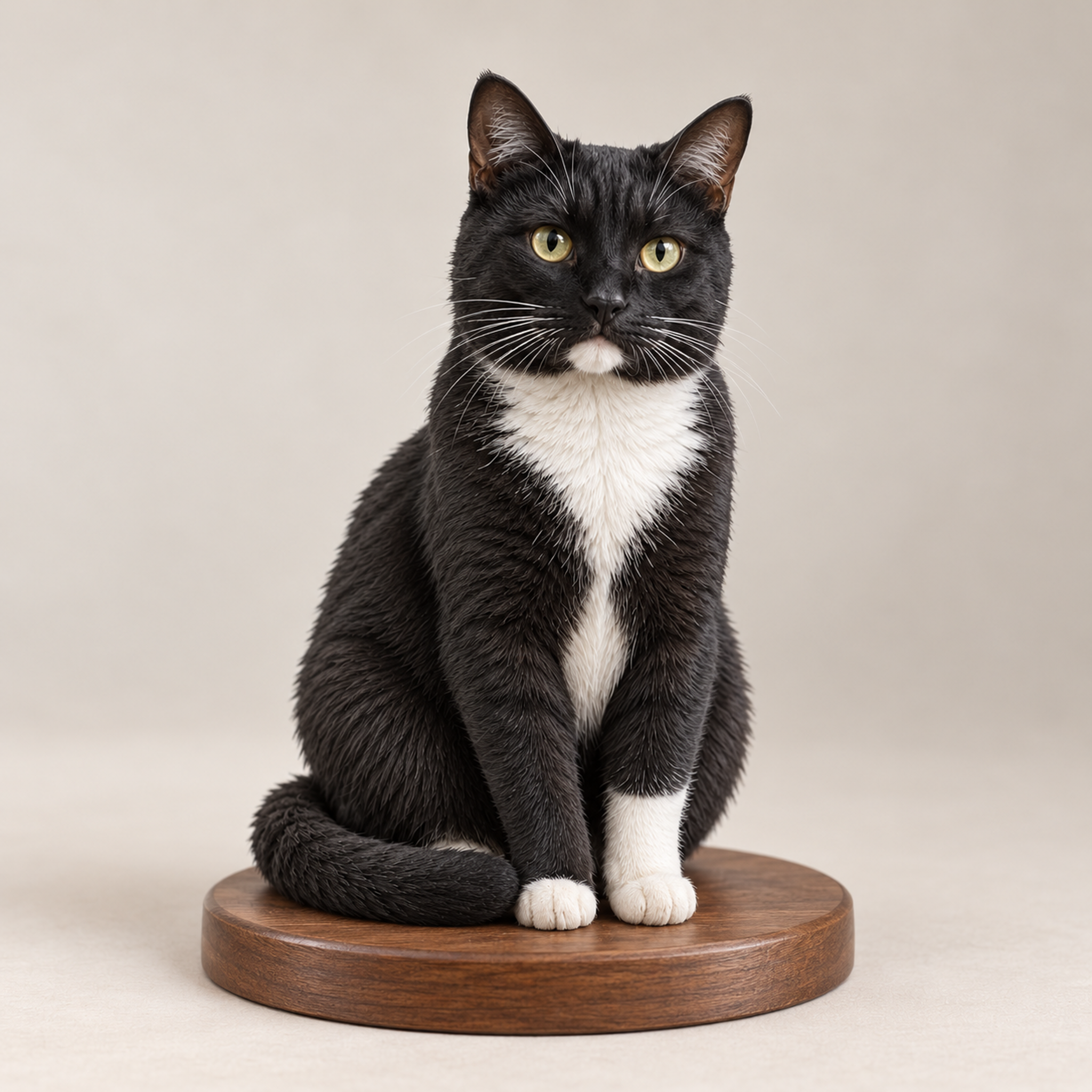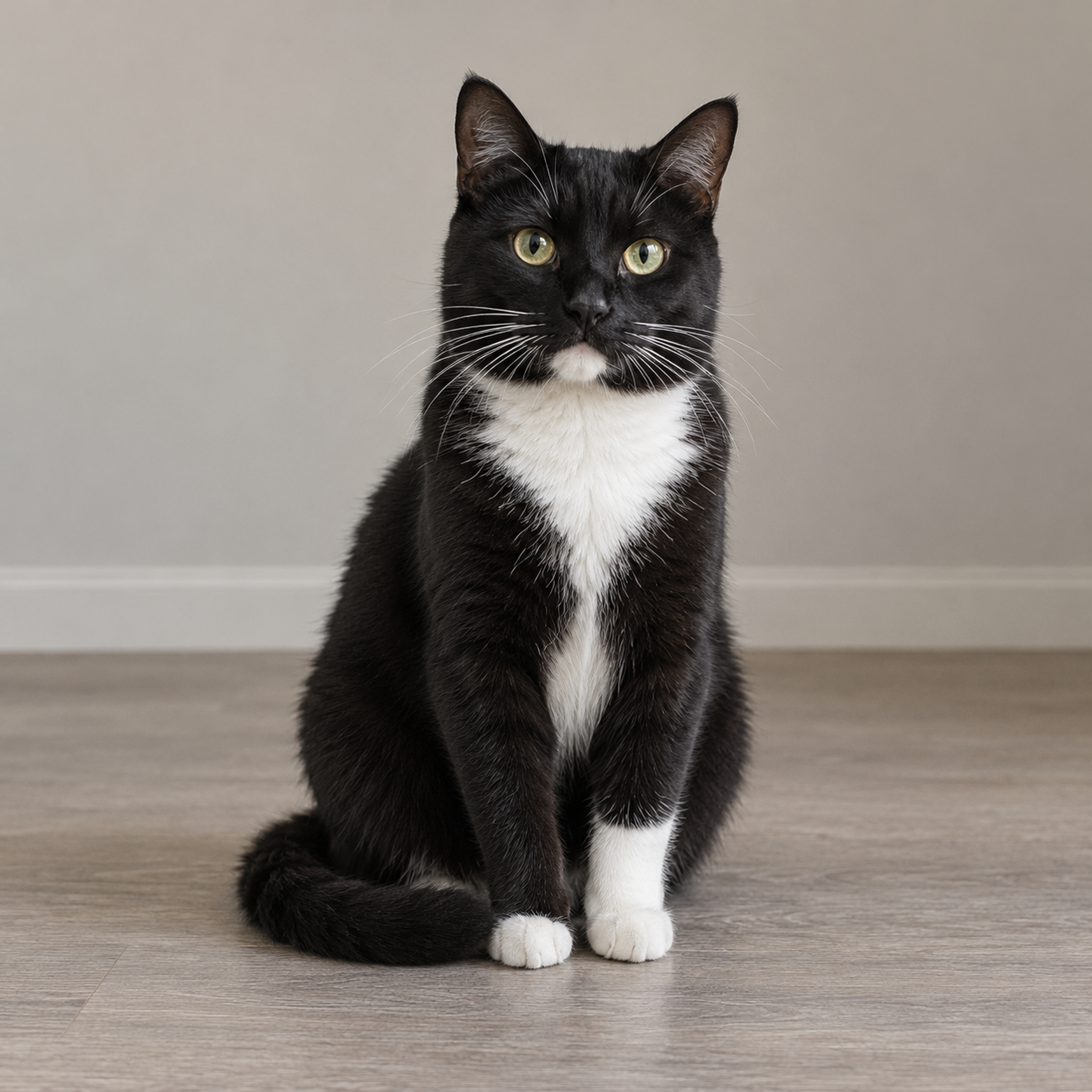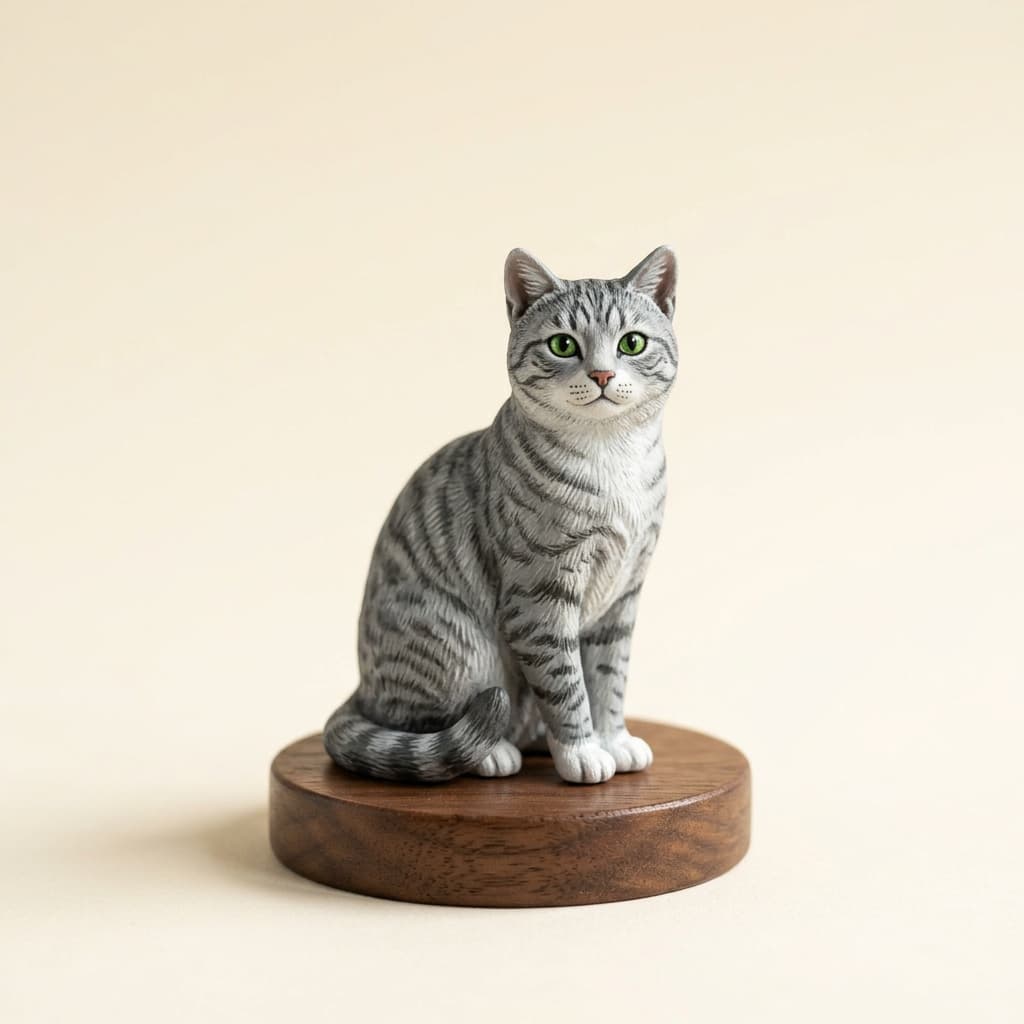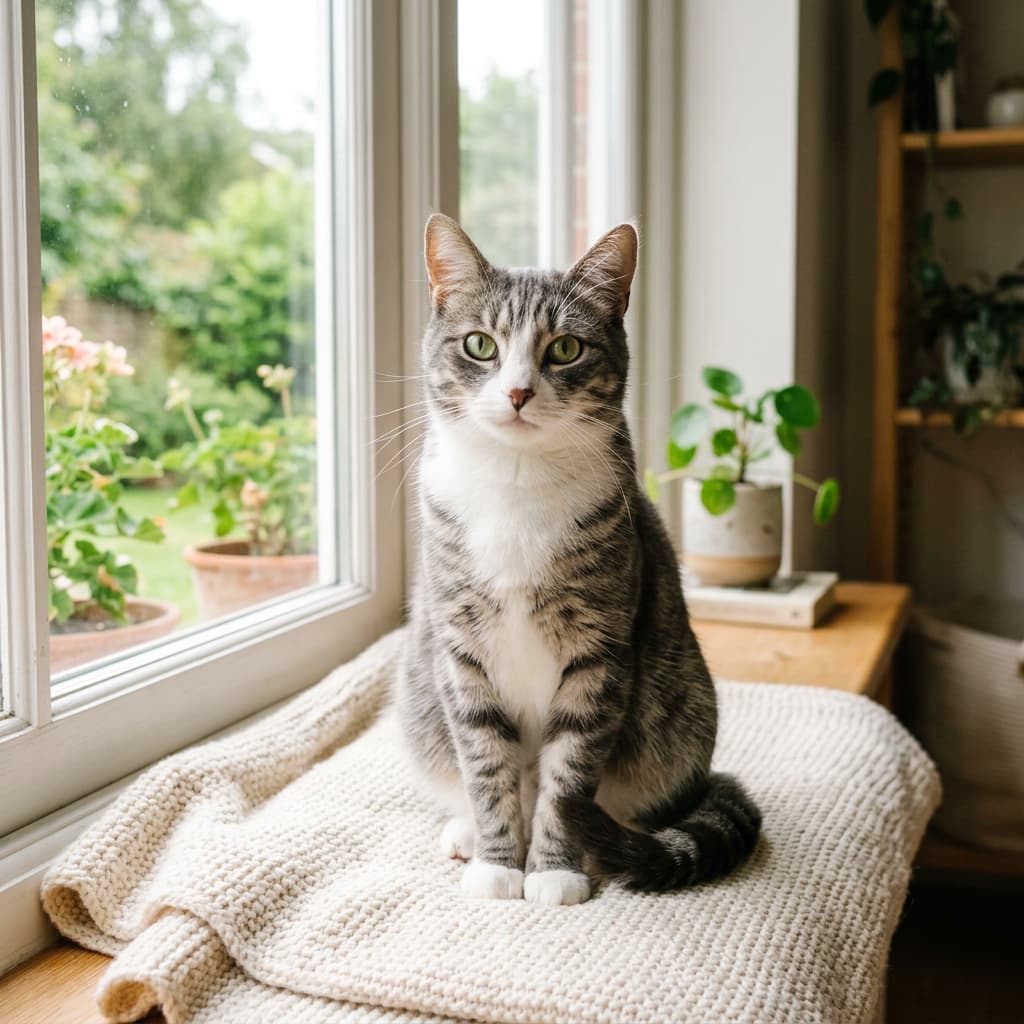
A semi-realistic corgi portrait with an individual head tilt
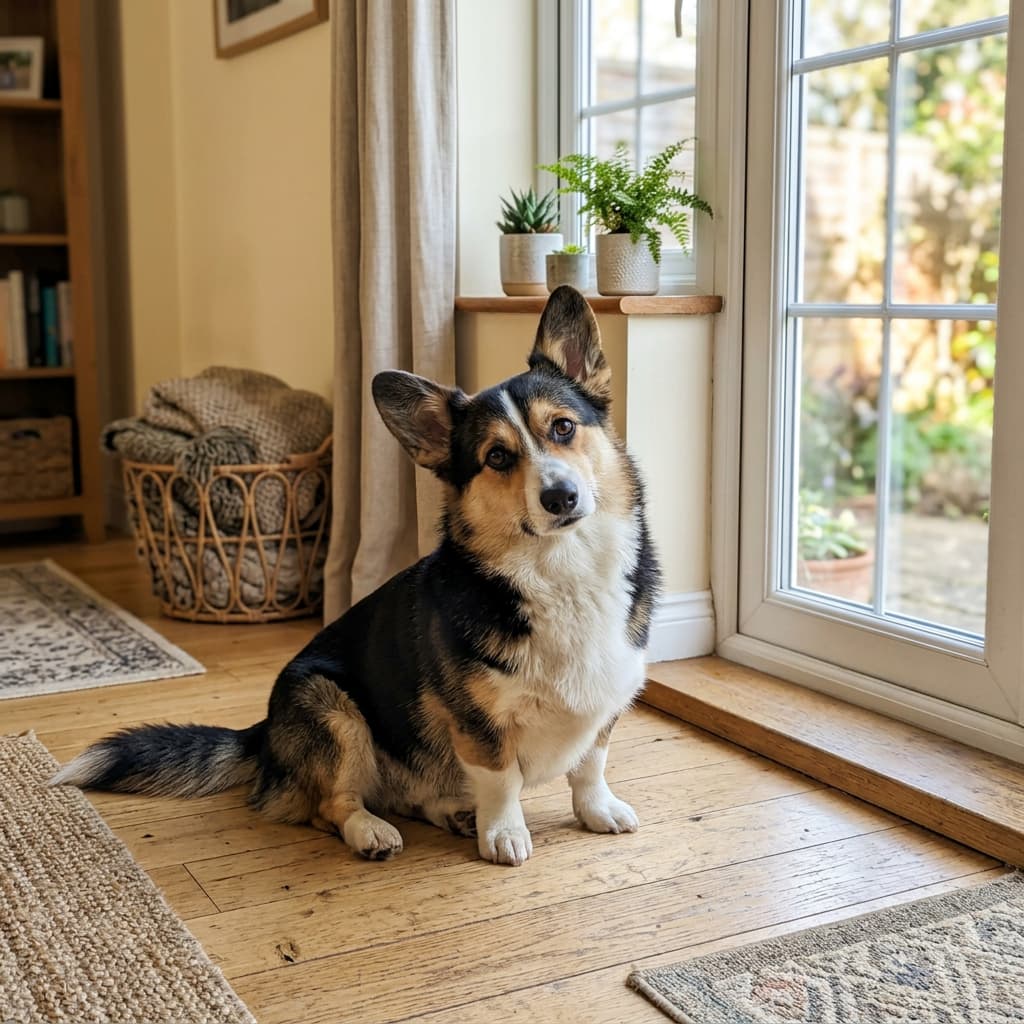
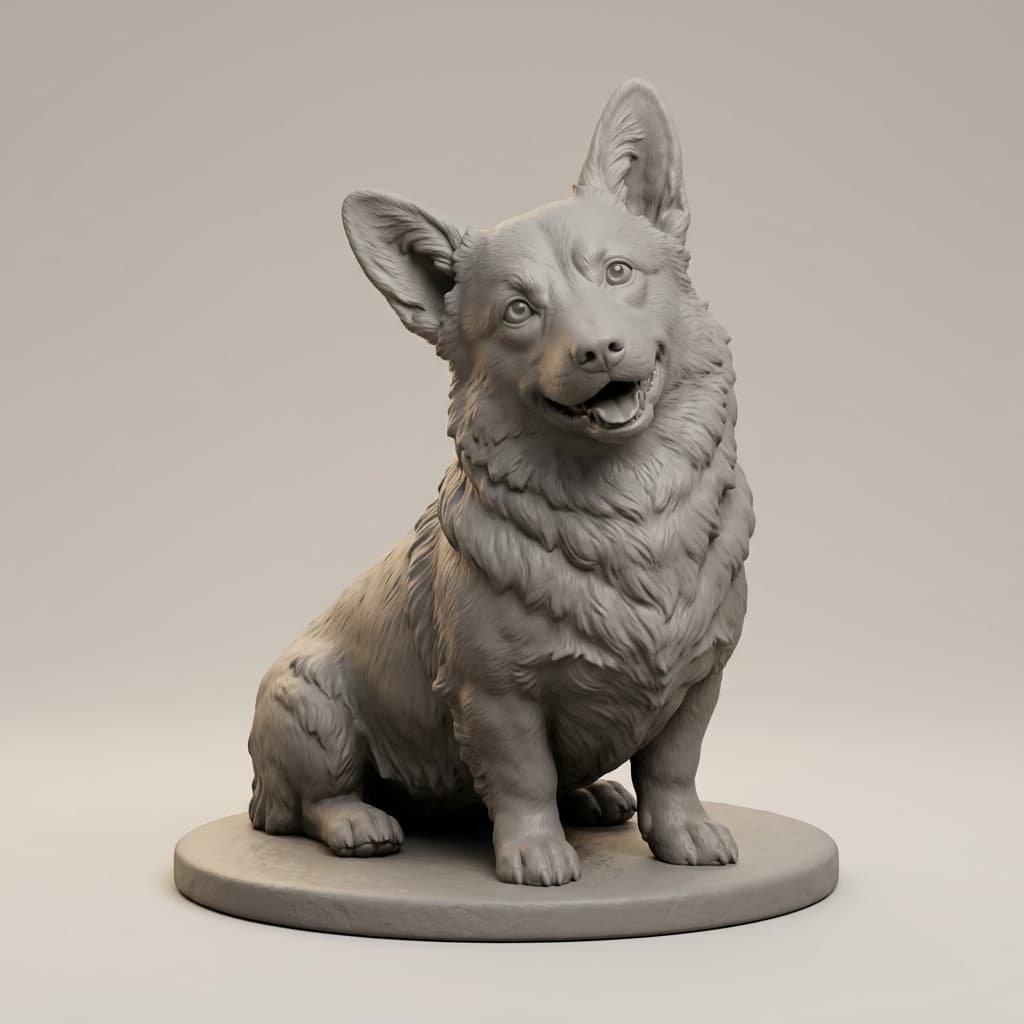
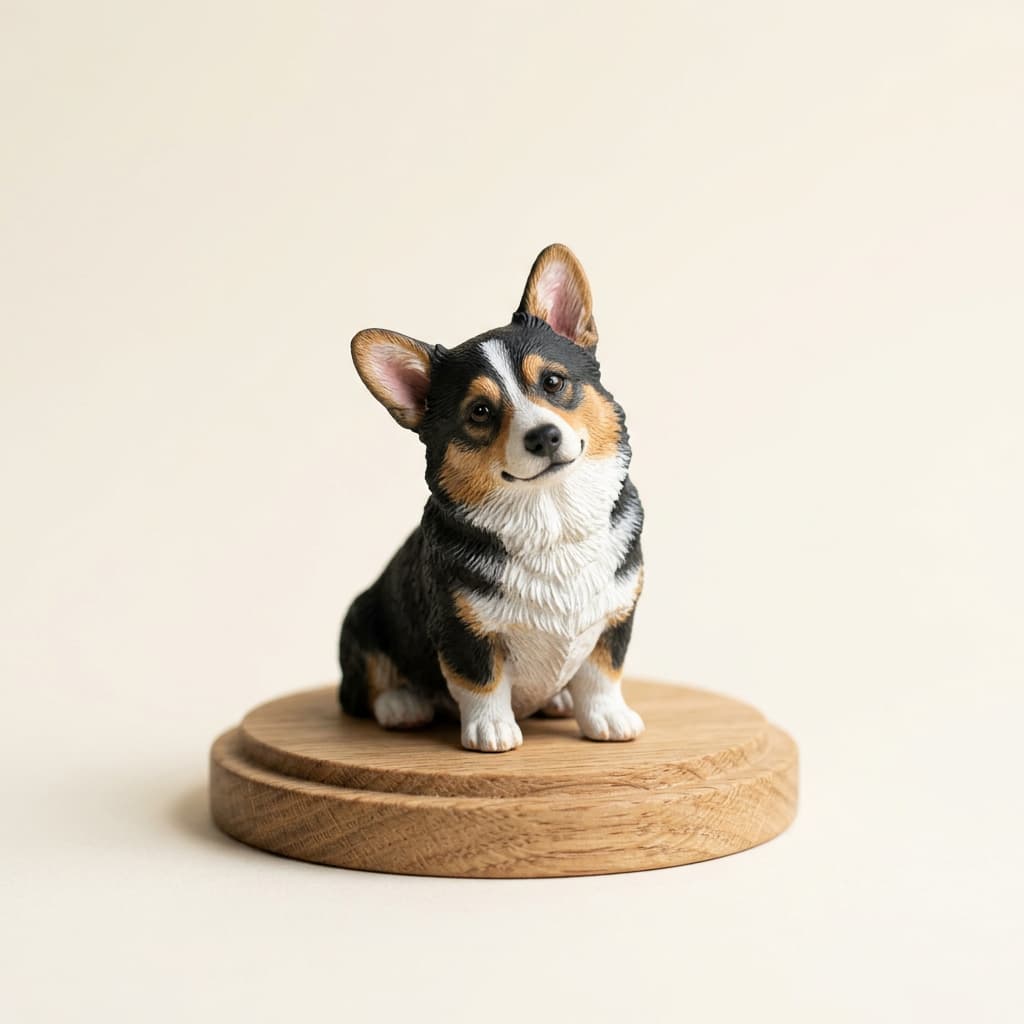
Biscuit’s design centers on a curious head tilt, an uneven white blaze and upright ears that are subtly different in shape. Together, these details give a tricolor corgi portrait its identity. The Semi-Realistic style keeps the relationship between head, chest and short legs natural, while simplifying the smallest fur details enough to remain clear in a small sculpture.
The Classic composition is approximately 11 cm along the sculpture’s longest side. Chest-fur accents add volume beneath the tilted face without hiding the muzzle. A slightly larger right ear and a blaze that narrows toward one eye create useful points to compare during proof review. The base is additional to the sculpture’s quoted size, so the final display footprint is confirmed separately.
Materials and the tricolor finish
A custom resin sculpture provides the structure for this type of portrait. High-resolution printing carries the ear contours, paws and larger chest-fur shapes; hand painting establishes the black saddle, tan facial patches and white chest. Keeping sculpted texture and painted markings in balance helps the face remain readable without making the surface look overly busy.
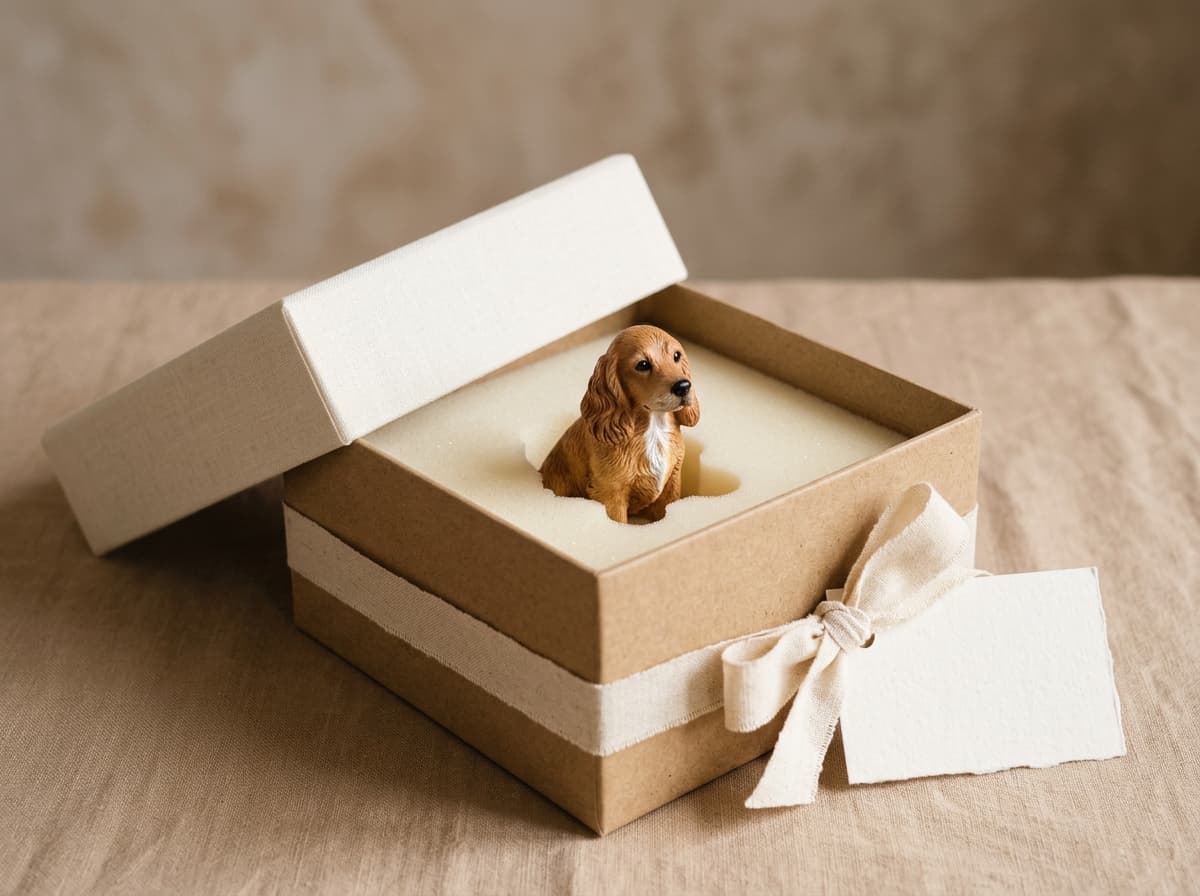
The current Classic Semi-Realistic configuration includes an oak name base, standard hand painting, a protective coating and protective packaging. Enhanced painting, alternative bases, acrylic covers and gift packaging are separate selections. For a tricolor coat, the important starting point is accurate placement of the large color regions. Additional painted depth can be discussed through the available painting options.
From reference photos to a hand-painted corgi
- Review the markings. A straight-on face photograph shows the blaze and tan eyebrows. Side and back views explain how the saddle wraps around the body. A clear photograph of the familiar head tilt helps distinguish that pose from camera perspective.
- Build and review the sculpt. The body is balanced beneath the tilted head, then the muzzle, ears and chest are refined. Check the tilt from several views in the digital proof, since a convincing front view also needs a stable overall silhouette.
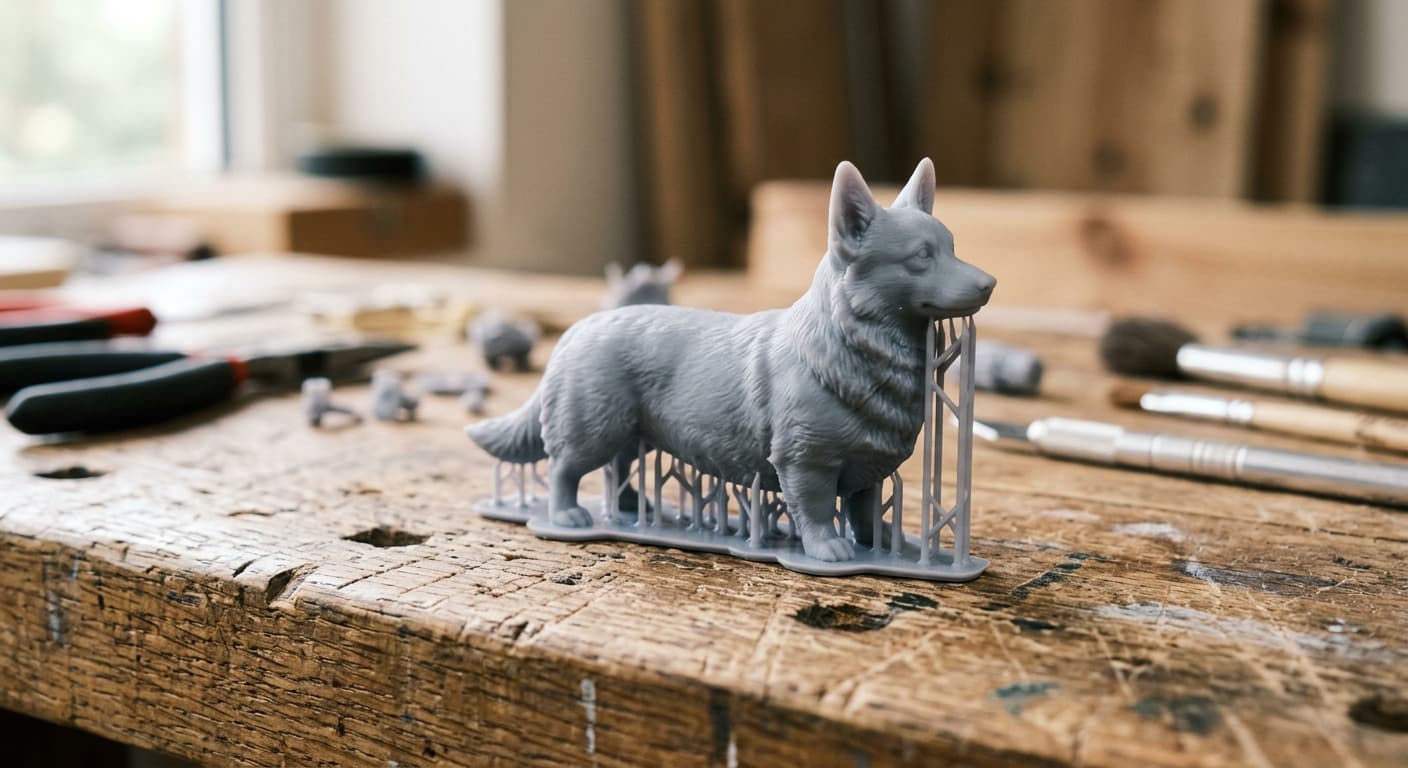
- Print and prepare the resin. After approval, the model moves to resin printing, support removal, surface finishing and priming. Fine ear tips need a practical thickness at this size, while the outline should still feel light.
- Paint and protect. The coat is mapped in black, tan and white, then smaller face and fur accents are added. Eye and nose highlights help the expression, with a protective finish completing the painted piece before inspection and packing.
What to confirm before production
For a similar custom corgi, use proof review to check the head angle, the difference between the ears and the position of the blaze. If a photograph has strong warm lighting, add a daylight image so the tan and white areas can be interpreted more consistently. The goal is a recognizable portrait built from useful references, with room to discuss the details before printing.
The schedule below gives the normal stages for a photo-based order. Proof preparation starts after photo review; physical production starts after proof approval; transit begins after dispatch. Tell us about a gift deadline early. Allow for your review time and possible customs or carrier delays, with an extra 3–5 business days normally needed during November and December.
Keeping the portrait ready for display
Place the corgi on a stable indoor surface, away from prolonged sunlight, damp areas and heat. Dust the chest texture with a soft, dry brush. Support the sculpture and base when moving it, rather than lifting by an ear or the muzzle. A separately selected acrylic cover can reduce dust exposure. This is a decorative collectible for ages 14+, with small and fragile parts.